
Wintering


for the kids or grandkids!
Easter Sunday in the 70’s –growing up on the farm.
Happy Easter!!
People seem to think on the first day of spring, or at least by Easter Sunday, that winter should be finished. That isn’t how I remember things growing up on the family farm in the 1970’s. Oh yes, there was an Easter or two, where we could wear our new spring dresses and patent leather shoes. But many times, Easter fell at a time when our world was filled with snow and cold. And then the most asked and answered question would be, “How will the Easter bunny get through all the snow?” He always made it—that’s for sure!
Prior to that day, I would have watched any and all of the religious programming on television put on by our father for our viewing pleasure–Billy Graham, Robert Schuller, and Oral Roberts. Oh, our dad loved his Evangelical preachers. My most enjoyable part of any of what showed up on television at this time of year was Jesus of Nazareth, which I still watch to this day, some 50 years later. Before the big day, mom would shop for all our favorites, including beef short ribs or sometimes ham, which were meats that she really knew how to make. Of course, her Easter table always had scalloped potatoes, sometimes scalloped corn, carrots, peas, and store bought buns warmed up. What we had for dessert escapes me now. Often times, especially when I was younger, our grandparents would be our dinner guests. Supper would be leftovers from our Easter meal, and Dad would be able to take an extra long nap in his chair.
And yes, we got Easter baskets that usually held a hollow chocolate bunny plus a big cream egg (fruit and nut or cherry) in a box, and mom would hide jelly beans all over the dining room and living room. It never took me long to find most of them–same places year after year (window sills, desk, and table) lol. Mom seemed to really enjoy making holidays like Easter and Christmas special for us.
My earliest memory of Easter was when I was 8 years old and had written a letter to the Easter bunny. Low and behold, when I woke up, he had answered my letter with muddy🐾 prints and a basket of goodies. Easter time growing up is a wonderful memory for me and one I reflect back on each and every year as the holiday arrives. Though we didn’t have baby chicks or bunnies on our farm, springtime was a time of renewal on this special place. The land after a cold, wet winter was renewed and ready for new crops. The cows began calving and our barn cats began having kittens. The first flowers I would see and smell were my grandmother’s tulips—she loved the red and yellow ones. All of the spring rains, longer days, warmer days and nights, and the return of the robins and whippoorwill are all things that I think about when I remember all of my Easters on the farm. 🐄 🐰🐤 🐱

Are these David Austin roses not the most gorgeous roses you’ve ever seen? Looking at these makes me want to escape to an English garden. Speaking of English gardens, has anyone ever taken an Enneagram test? You can find them on the internet. Sometimes they are free (you have to look around). I can’t find the link to the last one I took, but I remember my number, it is 1–the idealist and reformer. I think I consistently get 1 because I tend to be a rule follower. I just am. I feel secure, stable, and safe when I do. I don’t pretend to know why these things are so vitally important to me, but I know that everyone probably wants to feel secure and safe; some just don’t prioritize those things the way I do. I don’t think that I realized how strong my feelings were about ethics, leading an ethical life, ethical choices, thoughts, decisions, and lifestyle until I took an ethics class that really challenged me in 2006.
Speaking of enneagram’s, have you taken this cute test that features all of the houses in Nancy Meyer’s movies?
If I go by my enneagram test results (1), I would be matched up with the perfectionist, Amanda Woods, in The Holiday. That’s so not true in this case. Since I’ve watched all of them many times (I own them too), I know where my heart lies and it’s in this one:
Iris Simpkin’s House


Because when it comes to my home, clothing, and style, it’s always been about being an individualist for me.
Doesn’t Iris’s living room make you want to book a week in a cozy English cottage in Shere?
I am so there after the last two months that I’ve had, but yet, here I am on my blog. Because when life is difficult, busy, frustrating, happy, overwhelming, exceptional, where else would I be? I’m a writer. I write.
I’ve been busy with a lot of things since December’s end. One of them has been my continual transitioning from 3rd shift remote work to 1st remote work for almost forever. I may actually get it accomplished by spring. I am currently planning our early spring escape to Montreal, Canada. I’ve never been, but always wanted to. There’s no time like the present.
A recipe I tried this month: Marble and Vanilla Crepes here
 Yummo!
with fillings here
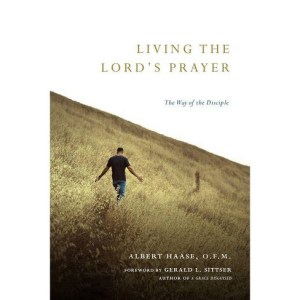
Favorite book this month: Living the Lord’s Prayer
Until next time, be well and stay safe!
if you prefer.
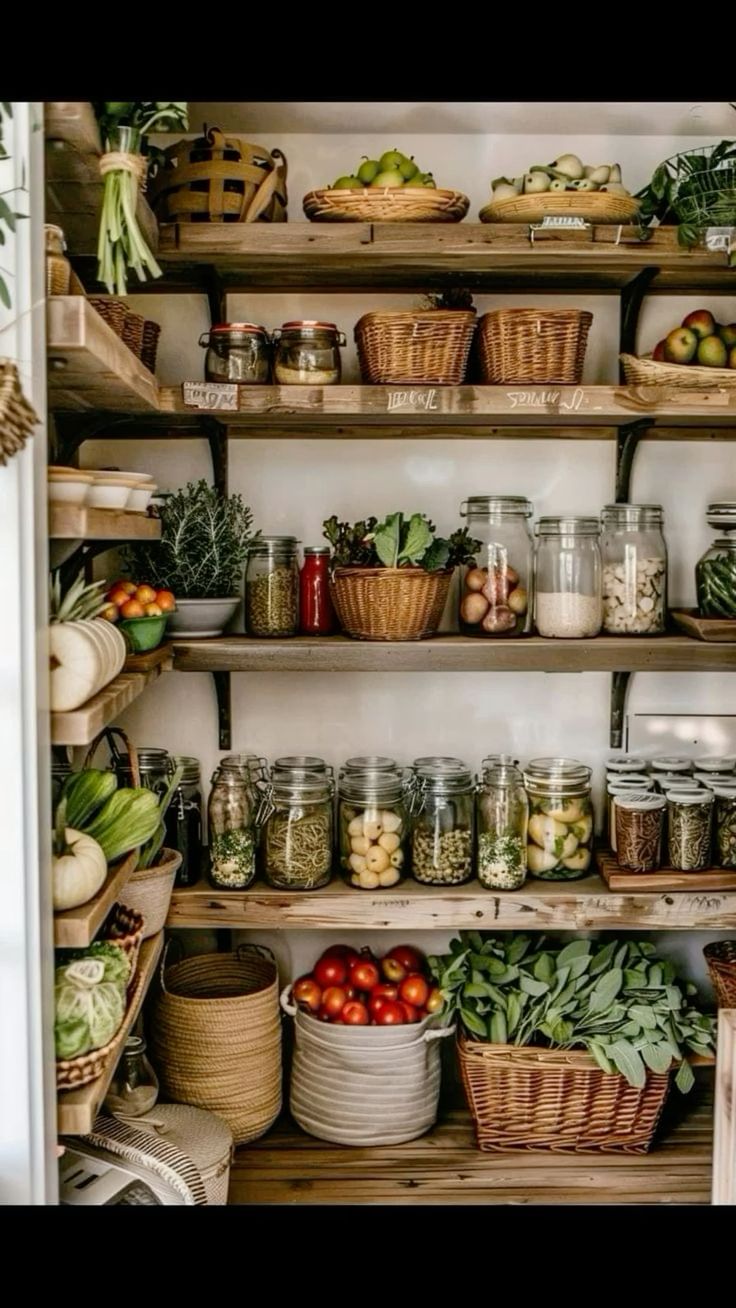
Early ingredients in grandma’s pantry would have been flour, sugar, salt, herbs, dried flowers, medicinals, and tinctures. There would also have been some meat in a salt brine and gunny sacks or crates of potatoes. In the early pioneer days, settlements were usually a day or more trip to get provisions. Homesteads generally had at least a flock of chickens and a family milk cow—this was a lot to possess in the old days. Though, of course, there were also many folks without any livestock who likely hunted or fished for the protein in their diets. Canned foods would begin to be sold in New York City in 1812, they were popular in wars, but wouldn’t be considered to be 100% safe until mechanically processed in 1850. Some of the first canneries were Libby’s, Underwood, Bordens, and Nestle.In 1910, women were encouraged to begin canning their own food for their families and leave the factory-produced canned foods in stock for the war effort.
Since the time of the influenza pandemic of 1918, consumers have steadily moved away from freshly and locally produced foods to larders filled with shelf-stable items.
https://www.acumence.com/the-history-of-canning-and-can-making/
By the 1950s, our grandmothers had discovered cans of tuna, aspic, Campbell’s soup, Spam, oatmeal, koolaid, corn syrup, and mayo.
In September of 1953, Swanson sold its first TV dinner.
GMOs were developed in 1973 and began being used in our food system in 1982. There are now food products in our food system that can survive forever—apparently a Twinkie and Spam can.
I always laugh when I hear anyone my age or older say that they’re going to stock their pantry like grandma did. My grandma was like most women, born in the last years of the 1800s and married in the 1920s. She canned meat, potatoes, various kinds of pickles, peaches, and tomatoes. She had a root cellar with root vegetables and a pantry with flour, rice, sugar, salt, and spices. Everything she canned seasonally was eaten up by the next season. Nothing, absolutely nothing, was wasted.
Food preppers often recommend stocking up and surviving entirely off of canned goods. My opinion?well, they’ll probably survive whatever happens, but their health will be another matter. I know a lot of people don’t pay attention to use by dates or are confused with best buy. Just know that depending on how the item you have in the freezer was processed, prior to freezing, determines how long the product retains its nutrients. Also, processed/frozen foods and frozen meat are almost always high in sodium. The chart below gives the time table for how long you can freeze meat and retain freshness, flavor, and nutrients vs. what it says on its label, or how long you know it has been in the freezer, or whether you care or not how old it is before you eat it. Personally, I’m not buying anything to store in a freezer that I wouldn’t eat in 6 or 12 months. I can go without frozen food for a day or two or even a week or two if that’s the case should something happen where I couldn’t buy food. There is no way that I have the capital to go out and purchase freezers full of food for a what if, then worry about keeping them going in a power outage, only to have to throw the food or God forbid eat food that is no longer fresh, tastes good, and lacks all nutrients. No, no, nope.
https://www.foodsafety.gov/food-safety-charts/cold-food-storage-charts
If you have a stash in the freezer and have gone out and bought a generator—you should know, depending on how many appliances you plan to run on it, a good-sized generator will need 50-100 gallons of fuel for 1 week. Judging by how fast gas stations shut down in a crisis, if you don’t have that on hand, you might want to develop another backup plan.
Here are some foods that can help you stay healthy and survive at the same time—rice (freeze then dry can), protein bars, pumpkin puree, squash—if you can store them safely, beans of any kind, and canned meat of any kind. You need a good amount of protein, vitamins, hydration, fiber, and personally, I would make sure I had a ferment or two in my pantry–kimchi, sauerkraut, cabbage, beet kvass, pickles.
Until next time,
xoxo

 savoringmysixties