Three Month Pantry Storage

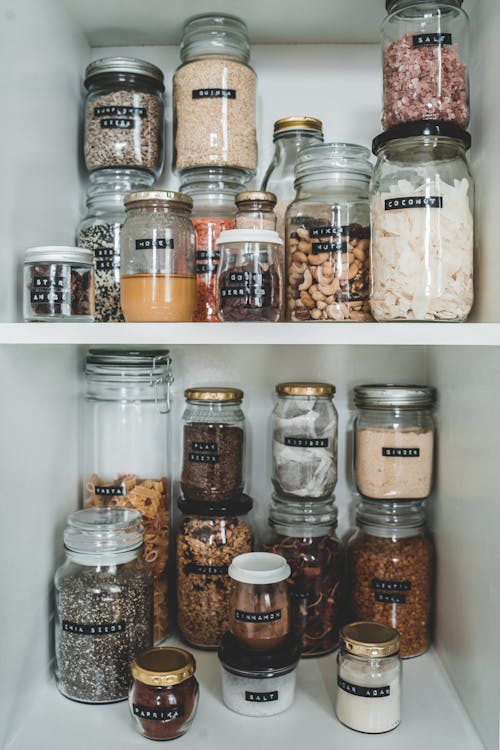
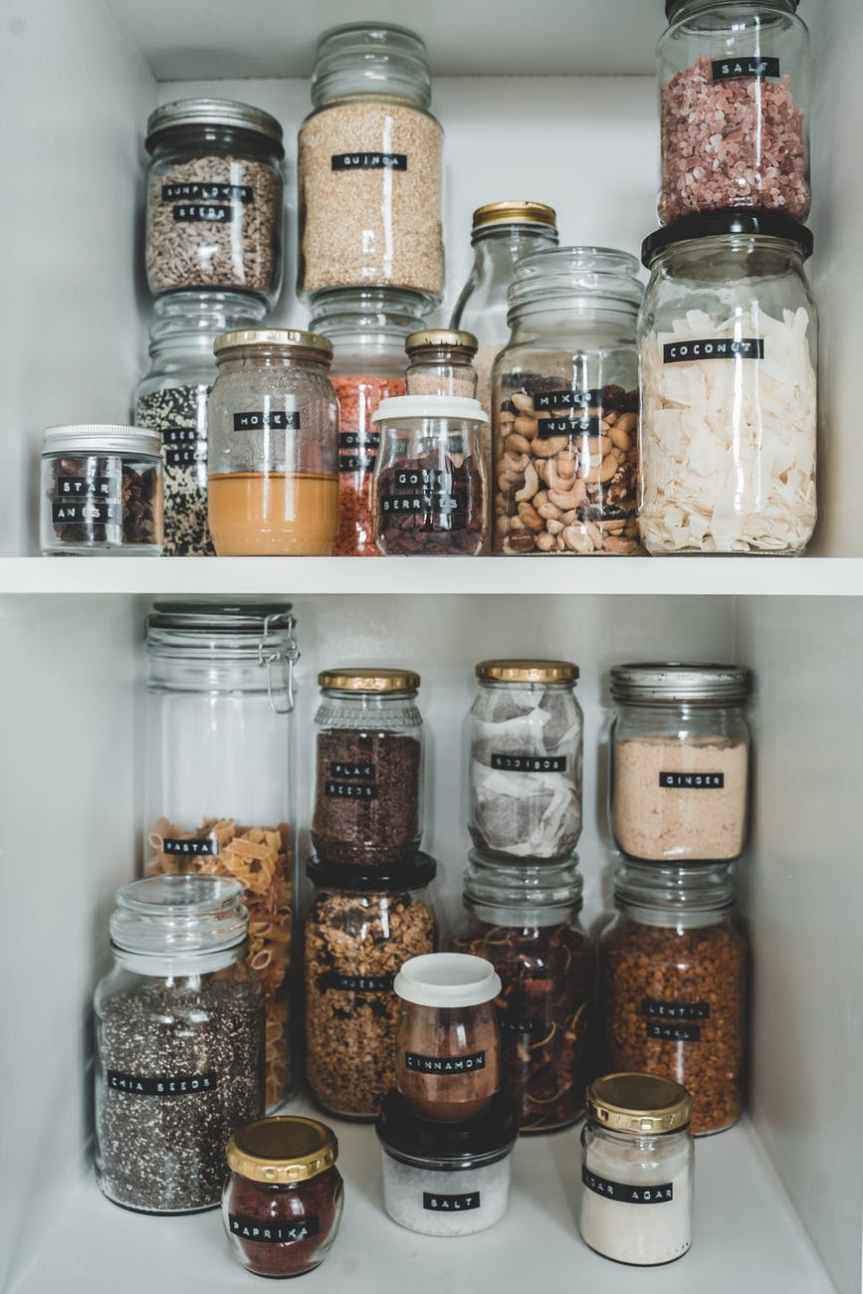
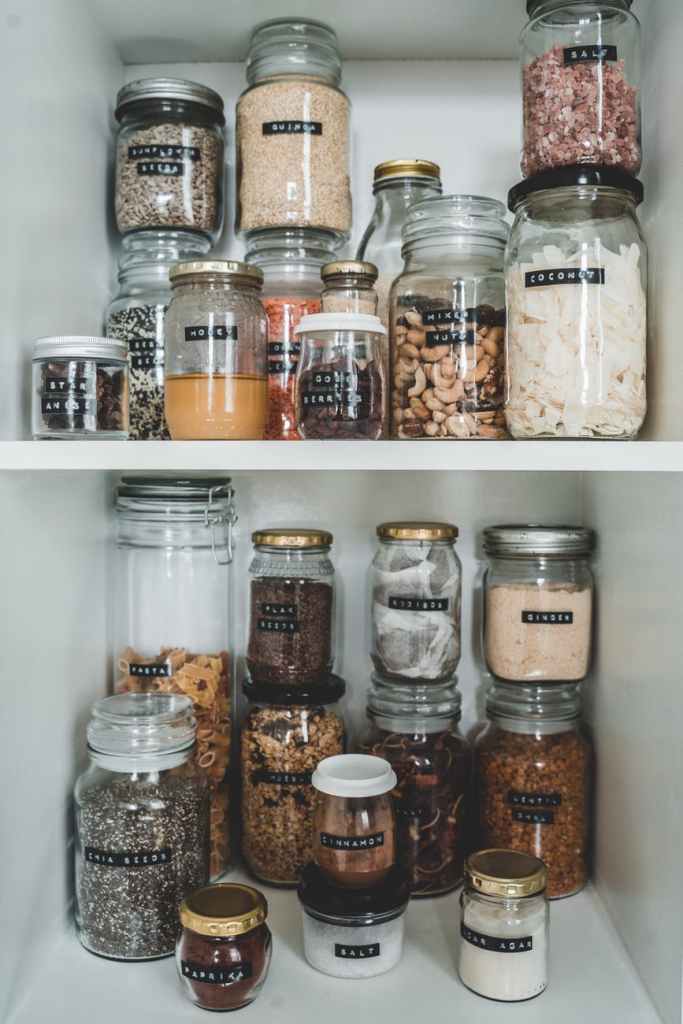
My first bit of advice would be to build a food supply as close to your family’s preferences as possible. Your family is going to be eating from this food stock up, so it should be as close to the food you would normally eat. Keep in mind that if you buy canned goods you need power to cook them with, so–do you have a backup generator, or a cooking stove and fuel?

Second—make sure your food supply is safe, dry, sealed tight, kept clean, cool, and rotated with each and every use. Long-term rice and flour storage tips can be found here and here .

If you live in an apartment like I do, you may have to build your own pantry by sectioning off an area in your apartment and storing your food supply there. We’ve had a pantry area in our apartment for years that we created with shelves bought at Home Depot. The room it is in is usually cool, even in the summer, and we have sheets thrown over the front of the shelving to keep all sunlight away from our supply. We also have cooling/sun shading curtains on our windows to keep heat and light out of that room as much as possible. It may not look pretty, but our dry goods are safe, easy to rotate, and this has worked for us for years.

I also have a seasonal larder–one where I keep an eye on seasonal produce being sold, create a meal plan, buy it, wash it, cook with it, and also store and preserve the extra produce I buy. My seasonal larder takes some work–first I need to meal plan for the season  (May-December). A plan that incorporates fresh food as it comes into season. Once I have a plan, then I need to develop the budget, and if I don’t have adequate suppliers, start looking for farmers or farm stands that will keep me stocked up on fresh produce at competitive prices. Once I’ve been to market or traveled to a local farmer’s store or farm, I then bring the produce home and wash it, process it, store it, or start creating meals from it. Some will go into the refrigerator, some into the freezer once washed and processed, and some into meals–with leftovers being turned into freezer meals. Plant starts-veg and edible flowers will be planted, seeds will be sown,  w/fruit eaten right on the farm (sometimes), meat repackaged into smaller portions, eggs in the refrigerator, and dry goods into the pantry. I often buy freshly ground flour,  maple sugar, misc. baking ingredients from a local Mennonite store. 

The list I’ve created includes what was in my mother’s pantry in the 1970s and 80s. My grandmother’s pantry in the late 1880s and early 1900s would have included a lot more home canned items. My great grandmother’s pantry in the mid-1800s probably had 3-4 items considered dry goods,  root vegetables in a root cellar, and brined meat. As time has gone on pantries have changed quite a bit. Now, modern day pantries are filled with pre-made meals, boxed and canned items to complete meals, meals in a can, tinned fruit and tinned vegetables and lots and lots of beans, rice, and snacks. There are also pantries built to hold modern day appliances, dishes, and home decor–which, of course, won’t be discussed on this blog. =)

Remember to keep in mind that if your family doesn’t eat things like oats, then don’t buy oats. If you don’t know how to make homemade bread, buns, pie crusts, or pizza crusts, then you won’t need to buy tons of flour, but try if you can, when you can, to make your own bread. The first few loaves are pretty sad looking–don’t give up!

Here is the list in PDF form pantryessentials23

Other condiments/spreads

Peanut butter, other nut butters (how could I forget Peanut butter?)

Oils other than seed oils if so inclined–jar of bacon grease, lard, or tallow

Cleaning

Vinegar

Baking

Flour (all-purpose)-general rule if you bake often is have on hand per person between 65-75# of flour per three month period of time. I don’t bake a lot, but do know how to make bread, pie crusts, and pizza crusts. So when I have those things in mind to make I make sure per 3 month cycle of time to have 60# of flour in storage (20 # per month for 3 months). There is just the two of us so 60# has worked out fine.

The above mentioned in whatever quantities you plan to use them should give you what I would consider a well-stocked pantry. You should be able to bake rolls, pie crusts, pizza crusts, cakes, cookies, and season your cooking–meat & veggies with the seasonings I’ve mentioned. I grow rosemary, thyme, oregano, and the spices for the Herbs de Provence less the chervil, marjoram, tarragon, basil, and fennel.

As far as pantry goods for meals–make sure what you have on hand is something your family eats and that it is preserved safely in containers if you plan on keeping it in stock longer than 3 months.

Purchasing: when you can as you can, try buying at the lowest price you remember it being, buy one get one, coupon item, purchase what you can store safely.

Only you can determine how much of any one thing your family needs for a 3 month supply. For our two-person household, I have cans of bush’s baked beans, soup, tuna, salmon, some white rice, honey, maple syrup, condiments, and backups of baking ingredients. Wisconsin winters can be tough. We rotate to keep our supplies as fresh as possible.

xoxo

Standing Still

Standing still and bidding farewell to April. May is, after all, my favorite of all months. One thing is for sure: time is not standing still. I need to take a minute here in my life and just breathe. One of the things that is on my mind as we close out the 1st month of the 2nd quarter of 2025 is, “How do I prepare for the unexpected better?” In the year 2020, I was reading news about what we would eventually deal with from 2020 to 2023, long before mainstream news picked up the story. I read news regularly from parts all over the world. We started to slowly prepare, and even though I would never know just how bad the situation would become all over the world, what we personally prepared ourselves for worked. We never ran out of anything and, because of our continued commitment to our health, stayed healthy. It was a lot.

Now, regardless of your politics, by now you’ve heard that retailers are refusing to pay the tariffs for goods. There have been preorders made for items generally sold in big box stores through August. Nothing that is being reported is entirely 100% accurate because people/news just don’t know. What has been said by people in the retail industry is by June, if not sooner, shelves will clear with panic, and supply will not be available for restocking. Christmas goods, usually shipped early summer, may wait at ports until someone decides to pay tariffs or the tariffs disappear. Fake trees, bulbs, decor, etc., all come from China. Toys, home decor, furniture, and holiday goods do too.

I’ve asked someone that is more organized than I feel that I am what to do. I was told to do this, if nothing else. Go room to room and ask yourself, “How many of these do I use or need for 1 year’s time?” I started in the medicine cabinet (OTC meds), then spices, any food stuffs that would be in an “international” aisle in the grocery store, electronics (back-up tablets?), toiletry items that could go up in price exponentially (makeup, shavers, toothpaste, deodorant, lotions), garbage bags, counter-top appliances, and easy to buy and store car parts for future work (we need a suspension issue fixed and front brakes; $225+tax for the parts now). We’re doing well in the clothing and shoe department. So, that’s a start. We’re thinking about $400.00 out of savings should get us these things, and then as far as these items go, we’ll be good for a year. That’s all we can do, and for right now it’s all we can afford. The worst outcome from buying these things is that we’ll be out $400.00 early on, and the best thing is that when and if prices go up or stock goes out, we have a backup or two of some very necessary items.

Let me know if you’re preparing in any way. In the meantime, I’m going to go back to taking it easy, keeping my head on straight, and preparing to move into my favorite month. I’m going to continue to enjoy the birdsong every morning, the different shades of pink at sunrise, the anticipation of fresh produce at the farmstand soon available, and the thrill that I will get when my tiny apartment garden is planted mid-May.

Until next time, be safe and be well.

Budget : My Life’s on a Budget

Telling someone that you’re on a budget used to feel like you were telling them you’re broke, or you mismanaged your finances, or living poor or? Fortunately, that’s not the case anymore in most people’s minds. Budgeting is taking responsibility for your finances, being a good steward of your income, careful management, and, I think learning how to separate wants from needs and create savings vs. spending.

That said, growing up in the seventies, people’s finances were a private thing. No one discussed anything about money unless they were sitting at the kitchen table with their spouse or discussing operating loans in their local bank.

My husband and I got married in the mid-nineties. We are from completely different backgrounds and grew up in completely different households where finances were managed far, far differently from one another. I grew up in a very, very conservative family–once my mother remarried (prior to that we were essentially homeless for 7–1/2 years). From age 8 years until h.s. graduation, I grew up on a farm. I’ve lived almost 52 years in the Midwest and all of them in rural farming communities. I am a country gal through and through and love the Midwest. My husband grew up in Europe and then moved to WI when he was 7–1/2 years old. His father was a military officer, as well as a very well-educated and successful engineer.

Their summer vacations were in Europe and mine were ice cream cones at the local A & W. His family was what my family called affluent. He grew up very privileged, and I grew up very poor to lower middle class. It should not be underestimated how difficult it is to marry someone with totally different views on finances.

We didn’t discuss money until a few years ago (we’ve been married 30 years). I handled all the finances–paid every bill, dealt with every bill collector, built and watched our credit scores go up and crash down, time and again, with little more than an occasional “can we afford this?” from hubby. It’s the way it once was with us.
Now, fast-forward thirty years, and we’ve had that conversation, though, I’ll admit, hubby is still of the mind–bullet points only. Suffice it to say, we are both on the same page when it comes to budget. We are at a place in our lives where time, abilities, health, how many tomorrows are left are front and center of our decisions. Now, realistically, any one of these things can be a part of the discussion at any age, but they usually aren’t. Once a person hits close to retirement age, it would be almost impossible and terribly silly not to include these things in the conversation. We want our own home again and I never, ever, want to have to rent from someone as long as I’m alive, again. We have to get a newer car–our 17-year-old car will not last forever no matter how much we need it to.

My firmest belief is that one must be prepared for anything. I know, I know, you can’t prepare for everything, but do everything that you can think of, can afford, can prepare for, put up, put aside, be proactive for yourself and your family. If you can, be generous with others and help them prepare with either words or actions and, if you’re able to–preparations.

Gather together with your loved ones and decide your priorities. In doing so, try to make your decisions based from the right now to tomorrow to some date in the distance to far off in the distance. Never assume that certain things can’t or won’t happen to you. Some things will surprise you and, by luck, maybe fate, others won’t affect you.

Budgeting, preparing, being prepared for anything aren’t dirty words. Having plan b and even plan c are essential. Budgeting your income can make it possible to be able to afford to live when a crisis hits, or an unexpected event, and emergency. Learning how to live for less may provide you with skills that are priceless. Trust me. I learned more while living poor, about finances, than I ever learned in 8 years of college while studying about it.

When our income was essentially cut in half within just a few months, I never believed that we could make it as well as we have. Though I am still concerned about the time left to save for our own home and my retirement in 5 or so years, I am optimistic that we will be able to afford something in the way of a home that is a better investment and more affordable for us than our current situation. Learning how to decide between wants and needs has been a great learning experience for us. Challenging ourselves to grocery shop and find the best buys has taught us some skills that only our experience could have afforded us.

No one knows what tomorrow will bring. The best that you can do is make sure that you are a responsible steward of your household’s income by spending it wisely; spending it on needs vs wants. You can also strengthen yourself and family for any situation that may occur by being prepared. The more skills that you learn regarding survival, resiliency, preparedness, and planning, the better chances you and your family have against all the unknowns.


Until next time,

xoxo