
Happy Valentines Day friends, from me to you!


There are four types of goals/resolutions people make every year in January–
Financial goals
Health goals
Home Goals
Work related goals
These are not comprehensive lists, but they are some of the top goals and resolutions under the headings-financial, health, home, and work.
Success at any one of them means picking 1-2 from each category and deciding short term or long term?
Here’s mine:
Financial–my #1 goal is to save more money, start an investment fund, and buy a new vehicle.
Health– special diet: increase vegetables (even ones I don’t like), more fiber, more cardio exercise.
Home- buy less of everything. Live a more simple, non-materialistic life.
Work– commute less, remote work the same or more, continue selling online (preparing for move, lightening the load), take a vacation.
The secret to fail-proof goal setting is to make realistic goals/resolutions that are short term or long term, adjust the terms as needed, and don’t look for ways out of them, but rather ways you can adjust/reset them to complete them/succeed at them/meet them.
Happy New Year to All!! and Happy, Healthy Goal-setting too!

Rest–a very underrated activity. When was the last time you took a nap?
Nap facts:
Meditation helps with being more:
Looking Ahead:
I am uncertain whether Black Friday is still relevant today. There are several times a year that deals are available from all the big box retailers. Most of our shopping is done long before November, and this year and last we’ve purchased most gifts from local small businesses. I know not everyone can do this, but when you can, it really is a special moment created for both you and for the small business owner.
Shopping days until Christmas: 35
My husband and I are doing things differently this year. We decided to create gifts by looking for things like fall/winter photography sessions or a professional photo for our Christmas card or a ticket to a local museum or opera next year. The holidays for us this year are going to be very intentional; they will also include whatever we can do for our community at this time and lots of time together at home creating lasting memories. That said, every year we look forward to Small Business Saturday. Until next time,
Wishing you and yours a happy holiday season! 🎄🎅🏻☃️🎀

xoxo
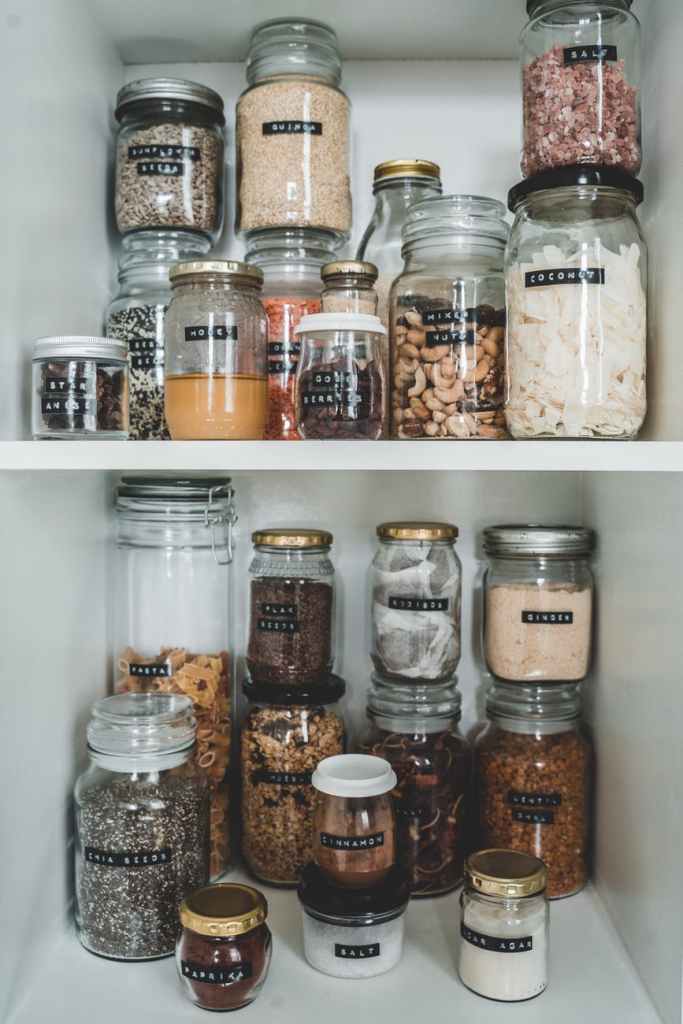
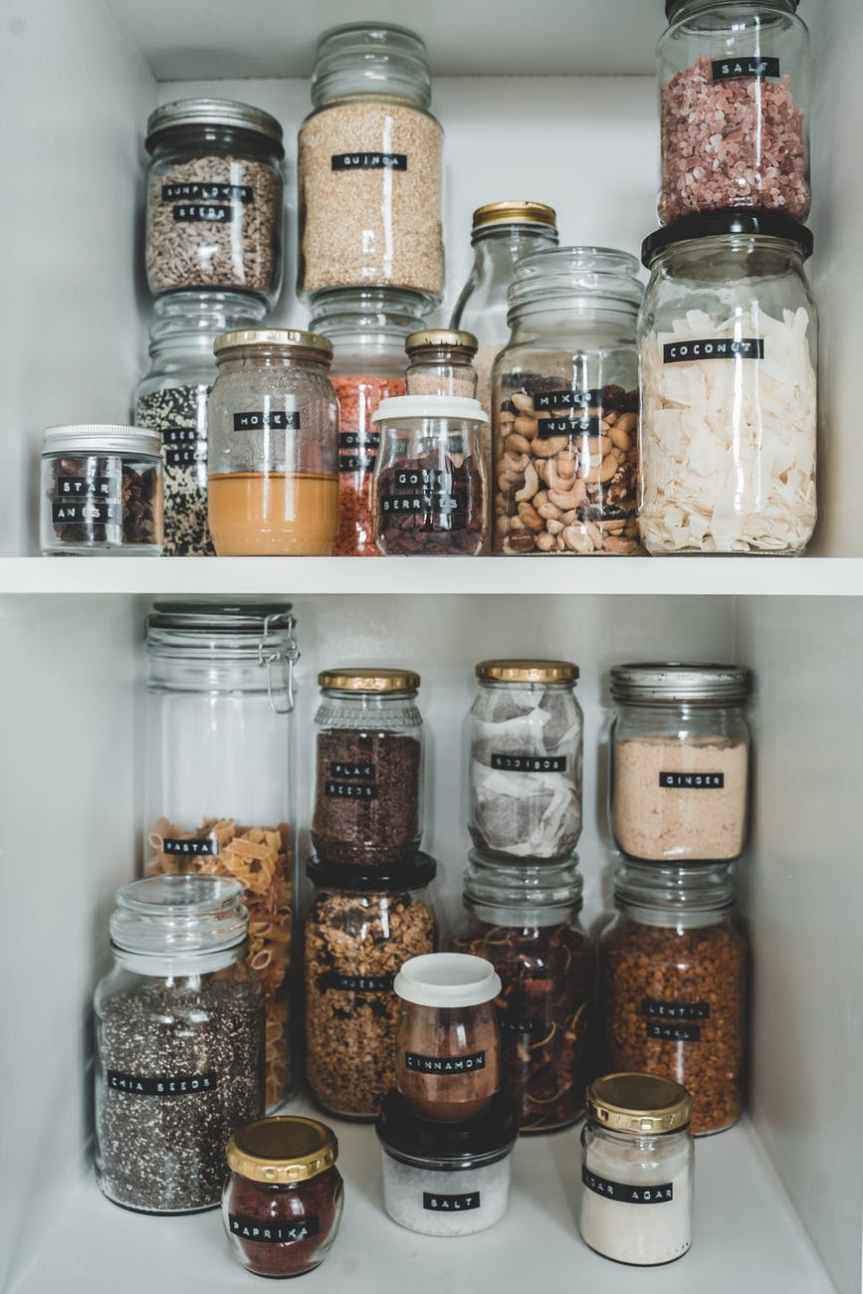
My first bit of advice would be to build a food supply as close to your family’s preferences as possible. Your family is going to be eating from this food stock up, so it should be as close to the food you would normally eat. Keep in mind that if you buy canned goods you need power to cook them with, so–do you have a backup generator, or a cooking stove and fuel?
Second—make sure your food supply is safe, dry, sealed tight, kept clean, cool, and rotated with each and every use. Long-term rice and flour storage tips can be found here and here .
If you live in an apartment like I do, you may have to build your own pantry by sectioning off an area in your apartment and storing your food supply there. We’ve had a pantry area in our apartment for years that we created with shelves bought at Home Depot. The room it is in is usually cool, even in the summer, and we have sheets thrown over the front of the shelving to keep all sunlight away from our supply. We also have cooling/sun shading curtains on our windows to keep heat and light out of that room as much as possible. It may not look pretty, but our dry goods are safe, easy to rotate, and this has worked for us for years.
I also have a seasonal larder–one where I keep an eye on seasonal produce being sold, create a meal plan, buy it, wash it, cook with it, and also store and preserve the extra produce I buy. My seasonal larder takes some work–first I need to meal plan for the season (May-December). A plan that incorporates fresh food as it comes into season. Once I have a plan, then I need to develop the budget, and if I don’t have adequate suppliers, start looking for farmers or farm stands that will keep me stocked up on fresh produce at competitive prices. Once I’ve been to market or traveled to a local farmer’s store or farm, I then bring the produce home and wash it, process it, store it, or start creating meals from it. Some will go into the refrigerator, some into the freezer once washed and processed, and some into meals–with leftovers being turned into freezer meals. Plant starts-veg and edible flowers will be planted, seeds will be sown, w/fruit eaten right on the farm (sometimes), meat repackaged into smaller portions, eggs in the refrigerator, and dry goods into the pantry. I often buy freshly ground flour, maple sugar, misc. baking ingredients from a local Mennonite store.
The list I’ve created includes what was in my mother’s pantry in the 1970s and 80s. My grandmother’s pantry in the late 1880s and early 1900s would have included a lot more home canned items. My great grandmother’s pantry in the mid-1800s probably had 3-4 items considered dry goods, root vegetables in a root cellar, and brined meat. As time has gone on pantries have changed quite a bit. Now, modern day pantries are filled with pre-made meals, boxed and canned items to complete meals, meals in a can, tinned fruit and tinned vegetables and lots and lots of beans, rice, and snacks. There are also pantries built to hold modern day appliances, dishes, and home decor–which, of course, won’t be discussed on this blog. =)
Remember to keep in mind that if your family doesn’t eat things like oats, then don’t buy oats. If you don’t know how to make homemade bread, buns, pie crusts, or pizza crusts, then you won’t need to buy tons of flour, but try if you can, when you can, to make your own bread. The first few loaves are pretty sad looking–don’t give up!
Here is the list in PDF form pantryessentials23
Other condiments/spreads
Peanut butter, other nut butters (how could I forget Peanut butter?)
Oils other than seed oils if so inclined–jar of bacon grease, lard, or tallow
Cleaning
Vinegar
Baking
Flour (all-purpose)-general rule if you bake often is have on hand per person between 65-75# of flour per three month period of time. I don’t bake a lot, but do know how to make bread, pie crusts, and pizza crusts. So when I have those things in mind to make I make sure per 3 month cycle of time to have 60# of flour in storage (20 # per month for 3 months). There is just the two of us so 60# has worked out fine.
The above mentioned in whatever quantities you plan to use them should give you what I would consider a well-stocked pantry. You should be able to bake rolls, pie crusts, pizza crusts, cakes, cookies, and season your cooking–meat & veggies with the seasonings I’ve mentioned. I grow rosemary, thyme, oregano, and the spices for the Herbs de Provence less the chervil, marjoram, tarragon, basil, and fennel.
As far as pantry goods for meals–make sure what you have on hand is something your family eats and that it is preserved safely in containers if you plan on keeping it in stock longer than 3 months.
Purchasing: when you can as you can, try buying at the lowest price you remember it being, buy one get one, coupon item, purchase what you can store safely.
Only you can determine how much of any one thing your family needs for a 3 month supply. For our two-person household, I have cans of bush’s baked beans, soup, tuna, salmon, some white rice, honey, maple syrup, condiments, and backups of baking ingredients. Wisconsin winters can be tough. We rotate to keep our supplies as fresh as possible.
xoxo



Summer is slipping away… have you had a good summer?

May Day is here. May Day is a European tradition that celebrates the historic struggles and gains made by workers during the labor movement. In France, on May 1st, they celebrate Fête du Travail (Labor Day), and almost every shop, restaurant, and tourist attraction is closed for the day. People in France give friends and family bouquets of muguet (lily of the valley). In America, from the 1800s through the early 1900s, May baskets were hung on friends’, family’s, and often love interests’ doors on May 1st. Now in the U.S., not much, if anything, is done to celebrate this wonderful day anymore. I order a rosemary plant for close friends, and I also buy each of them a bar of Muguet soap off of Etsy.
Friends, start planning your summer bucket list now because things will move quickly from May 1st to Labor Day. We’re getting ready to go on a day trip to Door County. Once we’re back home, I have my container garden, hiking, sunsets, writing, antiquing, farmers markets, YT, and more to keep me busy all summer.
Enjoy May!
🐝safe & 🐝 well.

Standing still and bidding farewell to April. May is, after all, my favorite of all months. One thing is for sure: time is not standing still. I need to take a minute here in my life and just breathe. One of the things that is on my mind as we close out the 1st month of the 2nd quarter of 2025 is, “How do I prepare for the unexpected better?” In the year 2020, I was reading news about what we would eventually deal with from 2020 to 2023, long before mainstream news picked up the story. I read news regularly from parts all over the world. We started to slowly prepare, and even though I would never know just how bad the situation would become all over the world, what we personally prepared ourselves for worked. We never ran out of anything and, because of our continued commitment to our health, stayed healthy. It was a lot.
Now, regardless of your politics, by now you’ve heard that retailers are refusing to pay the tariffs for goods. There have been preorders made for items generally sold in big box stores through August. Nothing that is being reported is entirely 100% accurate because people/news just don’t know. What has been said by people in the retail industry is by June, if not sooner, shelves will clear with panic, and supply will not be available for restocking. Christmas goods, usually shipped early summer, may wait at ports until someone decides to pay tariffs or the tariffs disappear. Fake trees, bulbs, decor, etc., all come from China. Toys, home decor, furniture, and holiday goods do too.
I’ve asked someone that is more organized than I feel that I am what to do. I was told to do this, if nothing else. Go room to room and ask yourself, “How many of these do I use or need for 1 year’s time?” I started in the medicine cabinet (OTC meds), then spices, any food stuffs that would be in an “international” aisle in the grocery store, electronics (back-up tablets?), toiletry items that could go up in price exponentially (makeup, shavers, toothpaste, deodorant, lotions), garbage bags, counter-top appliances, and easy to buy and store car parts for future work (we need a suspension issue fixed and front brakes; $225+tax for the parts now). We’re doing well in the clothing and shoe department. So, that’s a start. We’re thinking about $400.00 out of savings should get us these things, and then as far as these items go, we’ll be good for a year. That’s all we can do, and for right now it’s all we can afford. The worst outcome from buying these things is that we’ll be out $400.00 early on, and the best thing is that when and if prices go up or stock goes out, we have a backup or two of some very necessary items.
Let me know if you’re preparing in any way. In the meantime, I’m going to go back to taking it easy, keeping my head on straight, and preparing to move into my favorite month. I’m going to continue to enjoy the birdsong every morning, the different shades of pink at sunrise, the anticipation of fresh produce at the farmstand soon available, and the thrill that I will get when my tiny apartment garden is planted mid-May.
Until next time, be safe and be well.

for the kids or grandkids!
Easter Sunday in the 70’s –growing up on the farm.
Happy Easter!!
People seem to think on the first day of spring, or at least by Easter Sunday, that winter should be finished. That isn’t how I remember things growing up on the family farm in the 1970’s. Oh yes, there was an Easter or two, where we could wear our new spring dresses and patent leather shoes. But many times, Easter fell at a time when our world was filled with snow and cold. And then the most asked and answered question would be, “How will the Easter bunny get through all the snow?” He always made it—that’s for sure!
Prior to that day, I would have watched any and all of the religious programming on television put on by our father for our viewing pleasure–Billy Graham, Robert Schuller, and Oral Roberts. Oh, our dad loved his Evangelical preachers. My most enjoyable part of any of what showed up on television at this time of year was Jesus of Nazareth, which I still watch to this day, some 50 years later. Before the big day, mom would shop for all our favorites, including beef short ribs or sometimes ham, which were meats that she really knew how to make. Of course, her Easter table always had scalloped potatoes, sometimes scalloped corn, carrots, peas, and store bought buns warmed up. What we had for dessert escapes me now. Often times, especially when I was younger, our grandparents would be our dinner guests. Supper would be leftovers from our Easter meal, and Dad would be able to take an extra long nap in his chair.
And yes, we got Easter baskets that usually held a hollow chocolate bunny plus a big cream egg (fruit and nut or cherry) in a box, and mom would hide jelly beans all over the dining room and living room. It never took me long to find most of them–same places year after year (window sills, desk, and table) lol. Mom seemed to really enjoy making holidays like Easter and Christmas special for us.
My earliest memory of Easter was when I was 8 years old and had written a letter to the Easter bunny. Low and behold, when I woke up, he had answered my letter with muddy🐾 prints and a basket of goodies. Easter time growing up is a wonderful memory for me and one I reflect back on each and every year as the holiday arrives. Though we didn’t have baby chicks or bunnies on our farm, springtime was a time of renewal on this special place. The land after a cold, wet winter was renewed and ready for new crops. The cows began calving and our barn cats began having kittens. The first flowers I would see and smell were my grandmother’s tulips—she loved the red and yellow ones. All of the spring rains, longer days, warmer days and nights, and the return of the robins and whippoorwill are all things that I think about when I remember all of my Easters on the farm. 🐄 🐰🐤 🐱





 savoringmysixties