The days shorten without asking permission. Light fades earlier. Mornings linger.
We feel it in small ways—moving slower, craving warmth, wanting less noise. It’s easy to judge this shift, to push against it. But the body isn’t wrong.
Humans don’t hibernate, but we do respond to the season. To darkness. To cold. To the quiet.
My first bit of advice would be to build a food supply as close to your family’s preferences as possible. Your family is going to be eating from this food stock up, so it should be as close to the food you would normally eat. Keep in mind that if you buy canned goods you need power to cook them with, so–do you have a backup generator, or a cooking stove and fuel?
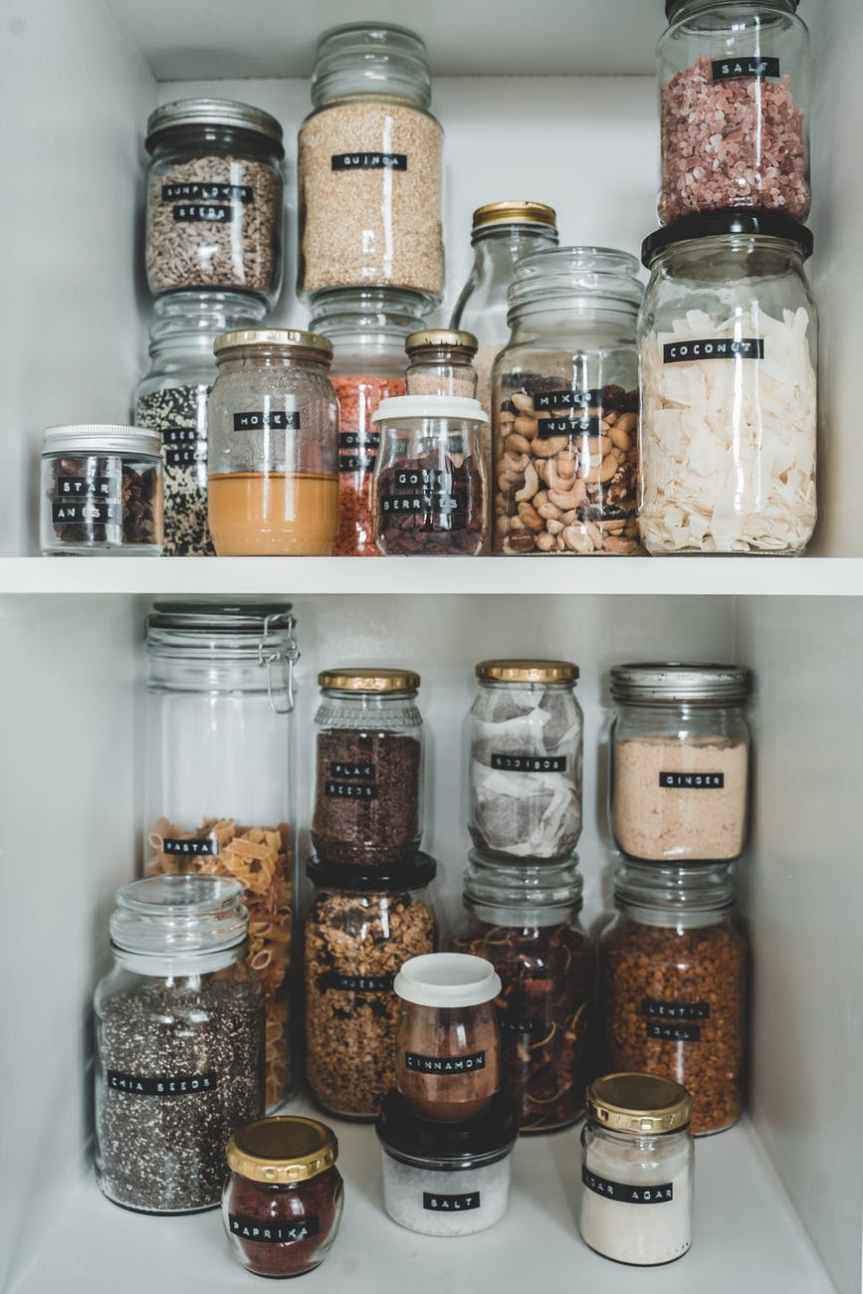
Second—make sure your food supply is safe, dry, sealed tight, kept clean, cool, and rotated with each and every use. Long-term rice and flour storage tips can be found here and here .
If you live in an apartment like I do, you may have to build your own pantry by sectioning off an area in your apartment and storing your food supply there. We’ve had a pantry area in our apartment for years that we created with shelves bought at Home Depot. The room it is in is usually cool, even in the summer, and we have sheets thrown over the front of the shelving to keep all sunlight away from our supply. We also have cooling/sun shading curtains on our windows to keep heat and light out of that room as much as possible. It may not look pretty, but our dry goods are safe, easy to rotate, and this has worked for us for years.
I also have a seasonal larder–one where I keep an eye on seasonal produce being sold, create a meal plan, buy it, wash it, cook with it, and also store and preserve the extra produce I buy. My seasonal larder takes some work–first I need to meal plan for the season (May-December). A plan that incorporates fresh food as it comes into season. Once I have a plan, then I need to develop the budget, and if I don’t have adequate suppliers, start looking for farmers or farm stands that will keep me stocked up on fresh produce at competitive prices. Once I’ve been to market or traveled to a local farmer’s store or farm, I then bring the produce home and wash it, process it, store it, or start creating meals from it. Some will go into the refrigerator, some into the freezer once washed and processed, and some into meals–with leftovers being turned into freezer meals. Plant starts-veg and edible flowers will be planted, seeds will be sown, w/fruit eaten right on the farm (sometimes), meat repackaged into smaller portions, eggs in the refrigerator, and dry goods into the pantry. I often buy freshly ground flour, maple sugar, misc. baking ingredients from a local Mennonite store.
The list I’ve created includes what was in my mother’s pantry in the 1970s and 80s. My grandmother’s pantry in the late 1880s and early 1900s would have included a lot more home canned items. My great grandmother’s pantry in the mid-1800s probably had 3-4 items considered dry goods, root vegetables in a root cellar, and brined meat. As time has gone on pantries have changed quite a bit. Now, modern day pantries are filled with pre-made meals, boxed and canned items to complete meals, meals in a can, tinned fruit and tinned vegetables and lots and lots of beans, rice, and snacks. There are also pantries built to hold modern day appliances, dishes, and home decor–which, of course, won’t be discussed on this blog. =)
Remember to keep in mind that if your family doesn’t eat things like oats, then don’t buy oats. If you don’t know how to make homemade bread, buns, pie crusts, or pizza crusts, then you won’t need to buy tons of flour, but try if you can, when you can, to make your own bread. The first few loaves are pretty sad looking–don’t give up!
Peanut butter, other nut butters (how could I forget Peanut butter?)
Oils other than seed oils if so inclined–jar of bacon grease, lard, or tallow
Cleaning
Vinegar
Baking
Flour (all-purpose)-general rule if you bake often is have on hand per person between 65-75# of flour per three month period of time. I don’t bake a lot, but do know how to make bread, pie crusts, and pizza crusts. So when I have those things in mind to make I make sure per 3 month cycle of time to have 60# of flour in storage (20 # per month for 3 months). There is just the two of us so 60# has worked out fine.
The above mentioned in whatever quantities you plan to use them should give you what I would consider a well-stocked pantry. You should be able to bake rolls, pie crusts, pizza crusts, cakes, cookies, and season your cooking–meat & veggies with the seasonings I’ve mentioned. I grow rosemary, thyme, oregano, and the spices for the Herbs de Provence less the chervil, marjoram, tarragon, basil, and fennel.
As far as pantry goods for meals–make sure what you have on hand is something your family eats and that it is preserved safely in containers if you plan on keeping it in stock longer than 3 months.
Purchasing: when you can as you can, try buying at the lowest price you remember it being, buy one get one, coupon item, purchase what you can store safely.
Only you can determine how much of any one thing your family needs for a 3 month supply. For our two-person household, I have cans of bush’s baked beans, soup, tuna, salmon, some white rice, honey, maple syrup, condiments, and backups of baking ingredients. Wisconsin winters can be tough. We rotate to keep our supplies as fresh as possible.
Fifty plus years ago, I was a little girl of three or four and remember traveling a long, long way to my grandfather’s farm. There he had two enormous Belgium draft horses, chickens, milk cows, and kitties. The house was lit by a kerosene lamp, no phone, and no indoor plumbing. I now believe my grandfather (my grandmother’s 2nd husband) was a Mennonite. Sitting out on the landscape of his farm, and as far as my little eye could see, was his farming machinery. Nothing mechanical, all manual labor, just him and his draft horses.
After each visit, we would travel a long way back home and then, before I knew it –we’d travel back to his farm once again. Finally, one day, our travels ended, and my mother married a farmer and I lived on my own farm. Lost in an abundance of land and places to hide and hay mows to lie in–my roots grew deep. Every building, every field, every corner of our barn, every season is intimately known to me. The farm that I grew up on was my sanctuary. In the loneliness and unhappiness of my childhood, the farm was a balm. A balm that soothed my tears and torments, and calmed my soul. Cats were always my people. It feels, as I look back on childhood, as if I spent the entirety of it loving, caring for, and nursing back to health a dozen cats or more. Preparation, it would seem, for the 21 years I worked in healthcare and the 16 years and counting that I’ve spent caring for our Gabe.
When I left home for college, I found myself longing for country life and cows so badly, while living in the big city, that I ended up quitting school and moving back home to the land of farms filled with Holstein cows. I’ve been there ever since–forty-three years, to be exact. When I retired from healthcare at 39, I found myself working at a dude ranch, because, yes, I missed living on a farm. Working on one wasn’t exactly what I thought it would be, but, I enjoyed it nonetheless. At 42, when my drinking was once again a major issue in my life, I quit with the idea in the back of my mind that someday I would own a piece of land with an old farmhouse on it. I needed to be sober, and I needed to save money in order to realize that goal.
Here I am at 60, a Master Gardener, influenced partially by my ag roots, a gardener who has learned how to grow fruit, veg, and grains in adverse weather conditions. I don’t know if we’ll ever own land with an old farmhouse on it, but I will grow things–be it eggs, produce, even meat. If I know anything, I know this much, and that’s my true north, where my authentic self can be found, is anywhere that my life can connect with a farm.
Ironically, when I was 17, I left the family farm, never to return to it. I also left behind the chance to marry a farmer because I believed that I wanted more out of my life than to be a farmer’s wife. That was true, I did. I didn’t feel at the time that I wanted my entire identity to be wrapped up in the family farm; helping my husband and working the farm beside him day and night. In the 70s, most women weren’t regular farm helpers in the sense of working the farm. Rather, they ran errands, or, due to lack of funds, grew everything their family ate off the land. In the 80s, more women had to help with farming in order to keep the family farm afloat–unless there were hired hands or children old enough to do it. Not having come from farm life like that–my mother didn’t garden, didn’t help on the farm, and all of our food came from the store. I was hesitant to become involved in a life that to me looked like nothing short of constant hard work and poverty. Farms in the 70s were being foreclosed on left and right and many, many farmers moved away from it to live and work in bigger cities.
I don’t have any regrets about the decisions that I made back then, but, I do wish that throughout my life I wouldn’t have been so hasty in other decisions that I made. My home, the farm that I grew up on, isn’t my home anymore. It once was, when I was young. I felt at home when I was growing up. I felt connected to that place in every way one can be connected. Unfortunately, even though I do have some good memories growing up there, I am not connected to nor did I ever feel connected to the family that I grew up with. All that’s left is a faint memory, the farm no longer, its occupants nearly all gone, and from what I last saw several years ago, a mere shell of what it once was. I will forever cherish the memories of this place that I loved.
My roots grow deep and even though I can never go home– They can always be found in the Midwest, in farmland, farm life, country life, home. I can’t deny it. I struggled all my life trying to find myself. Trying to find out who I was and what I was and where I came from. I came from a place, long-lost to me now, that I shall always remember. My roots are deep. My roots are deep.












 savoringmysixties